React
Passing States
#react
- Every useState has it's own scope which makes sure the entire web page doesn't re-execute but only the component, when state is changed
Component Instances work in Isolation
- One's state is completely independent of another.
Updating State Based on old State
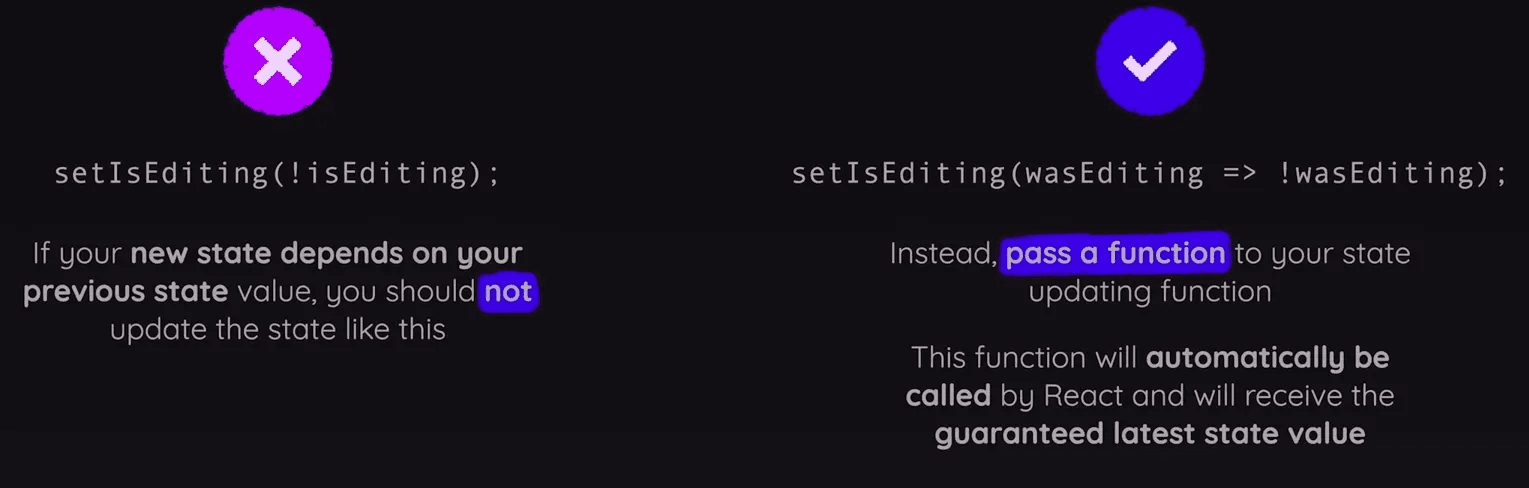
- React schedules state updates in future. Not instantly
- Pass a function to immediately change current state
Example: When directly changed state
const [isEditing, setIsEditing] = useState(false);

function handleEditing() {
	setIsEditing(!isEditing); // false to true
	setIsEditing(!isEditing); // false to true
}
When passed a function
const [isEditing, setIsEditing] = useState(false);

function handleEditing() {
	setIsEditing((isEditing) => !isEditing); // false to true
	setIsEditing((isEditing) => !isEditing); // true to false
}- Also pass a function as Initial State to useState if state is heavy, to avoid rerunning useState every time re-render, and not slow down website
- useState works a little differently when passed an object. setState overrides prev entirely
function App() {
	const [state, setState] = useState({count : 4, theme: 'blue'})
	const count = state.count
	const theme = state.theme

	function decrementCount() {
		setState(prevState => {
			return {...prevState, count: prevState.count - 1}
		})
	}
}
Two way Binding
// to dynamically change playerName when input change
const [playerName, setPlayerName] = useState(initialName);

function handleInput(event) {
    setPlayerName(event.target.value);
}

<input type="text" value={playerName} onChange={handleInput} required />
When same element listens to change, and feeds value back into it.
- Create deep copy when State depends on array or Object. Since passed by reference. Hence should change in an immutable way.
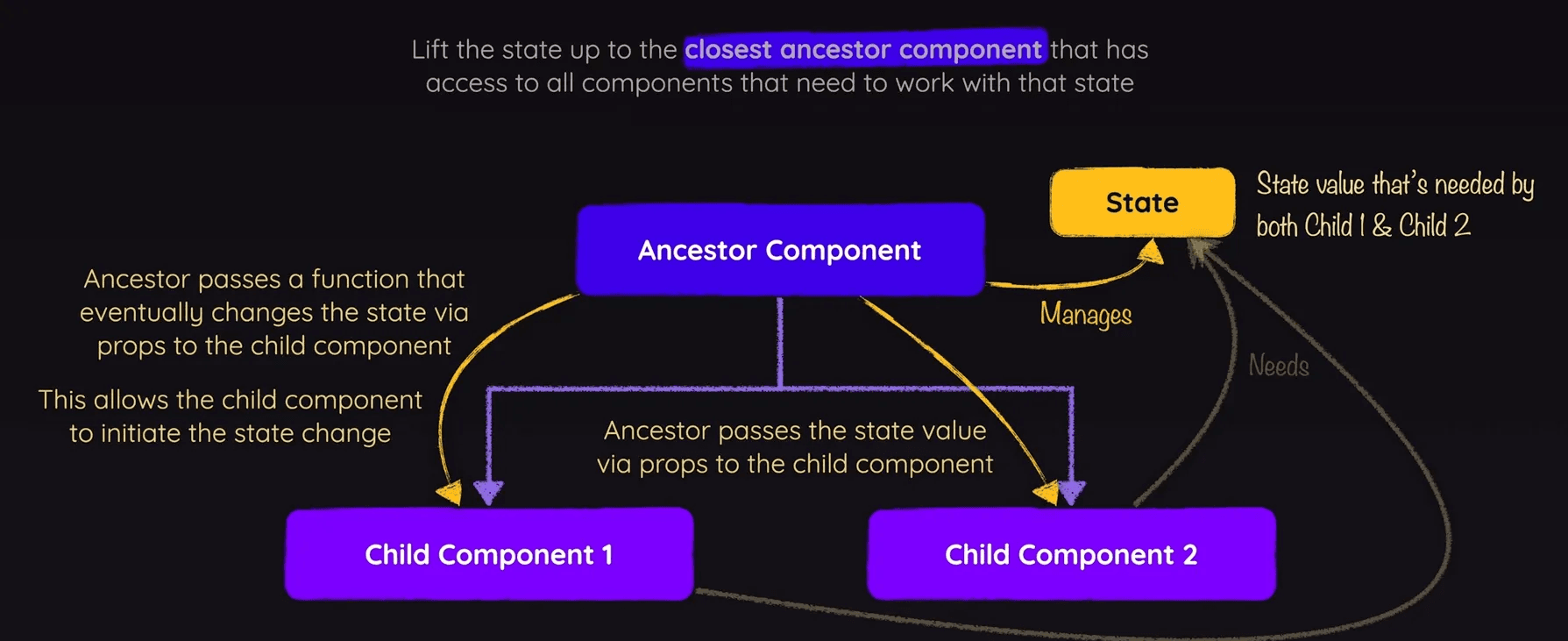
Lifting State up
When multiple components need to share a variable or state. Define that state in the Lowest Common Ancestor. And then keep passing down the state